"Incipit Legenda Didonis Martiris, Cartaginis Regine.
Glory and honour,
Virgil Mantuan,
Be to thy name! and I shal, as I can,
Folow thy lantern, as thou gost biforn,
How Eneas to Dido was forsworn".
Geoffrey Chaucer
THE LEGEND OF DIDO, QUEEN OF CARTHAGE (LGW, III - 1/4)
This noble queen that was named Dido,
That used to be the wife of Sychaeus,
That was fairer than the bright sun,
This noble town of Carthage had begun.
In which she reigned in such great honor
That she was held of all queens the flower
Of gentleness, of freedom, of beauty,
So that well was he who might see her once;
She was so desired by kings and lords
That her beauty had set all the world afire,
She stood so well in everyone's grace.
(modernized by James M. Hunter)

|
|
Elissade
curata da
Salvatore Conte

"Virgilmurder", by Jean-Yves Maleuvre
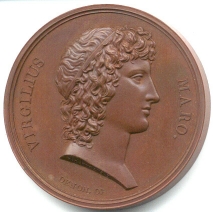
PUBLIUS VERGILIUS MARO
(born in 70 B.C.; murdered in 19
B.C.)
He did it. He treacherously killed Virgil, the best poet in the world.
2000 years later, the emperor Caesar Augustus must be put in accusation.
 Academic D-links:


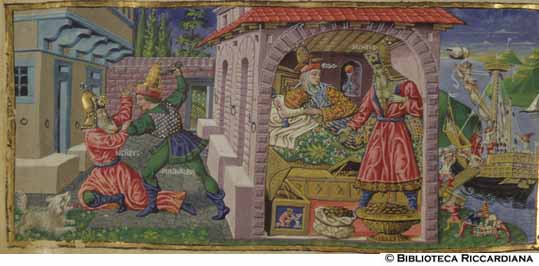
Apollonio di Giovanni e bottega
Sicheo ucciso da Pigmalione appare a Didone esortandola a partire
(Sec. XV - Firenze, Biblioteca Riccardiana)
Independent D-links:
 |
Abandoning Dido,
by Katie Vieceli
|
|
|
Dido, by Carlos Parada |
|
|
Didon ou Elissa, by Mayed |
|
|
Didone, by Liceo Bagatta (The Comenius Project) |
|
|
|
|
|
Here reason speaks of the prudence and attentiveness of Queen Dido, by Christine de Pisan (tr. by Earl Jeffrey Richards) |
|
|
La
honestidad defendida de Elisa Dido, reina y fundadora de Cartago, by
Álvaro Cubillo de Aragón (ed. de Susana Barragán Ramírez y Laura Ortega
Pinillos)
|
|
|
Morte e Contromorte in Virgilio,
by Salvatore Conte
|

|
|
Progetto Didone - Donne Inca che Determinano una Organizzazione Nuova per l'Europa, by Inca-CGIL |
|
|
Sleeping with the enemy - She was Cleopatra's precursor and a model for
Elizabeth I - and she might just be the archetypal ex-wife. Gary Taylor on the
allure of Dido, by Gary Taylor, The Guardian
|
|
|
La strega, by Mimma
Rossi
|
|
|
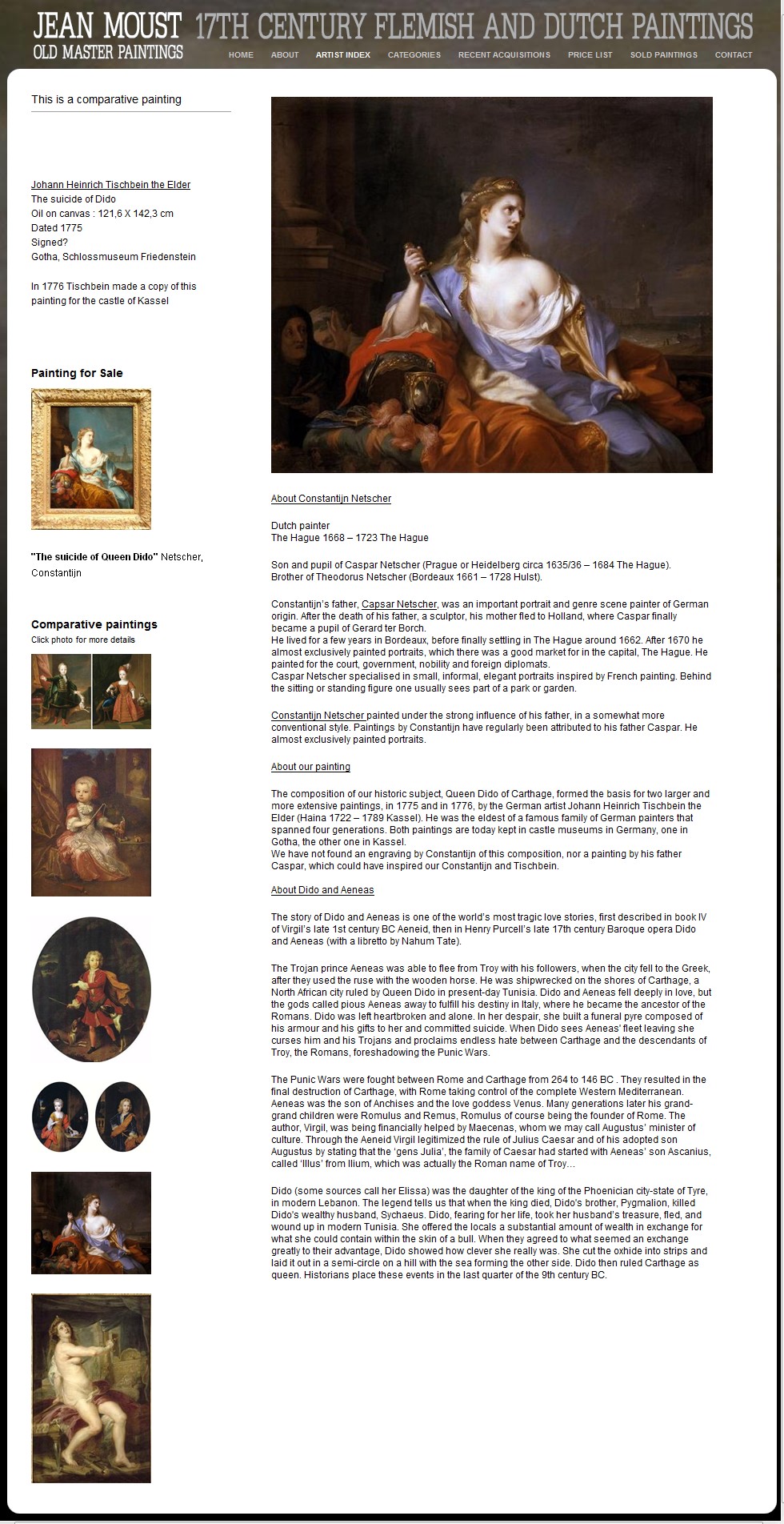
The suicide of Dido, by Johann Heinrich Tischbein the Elder
|
|
|
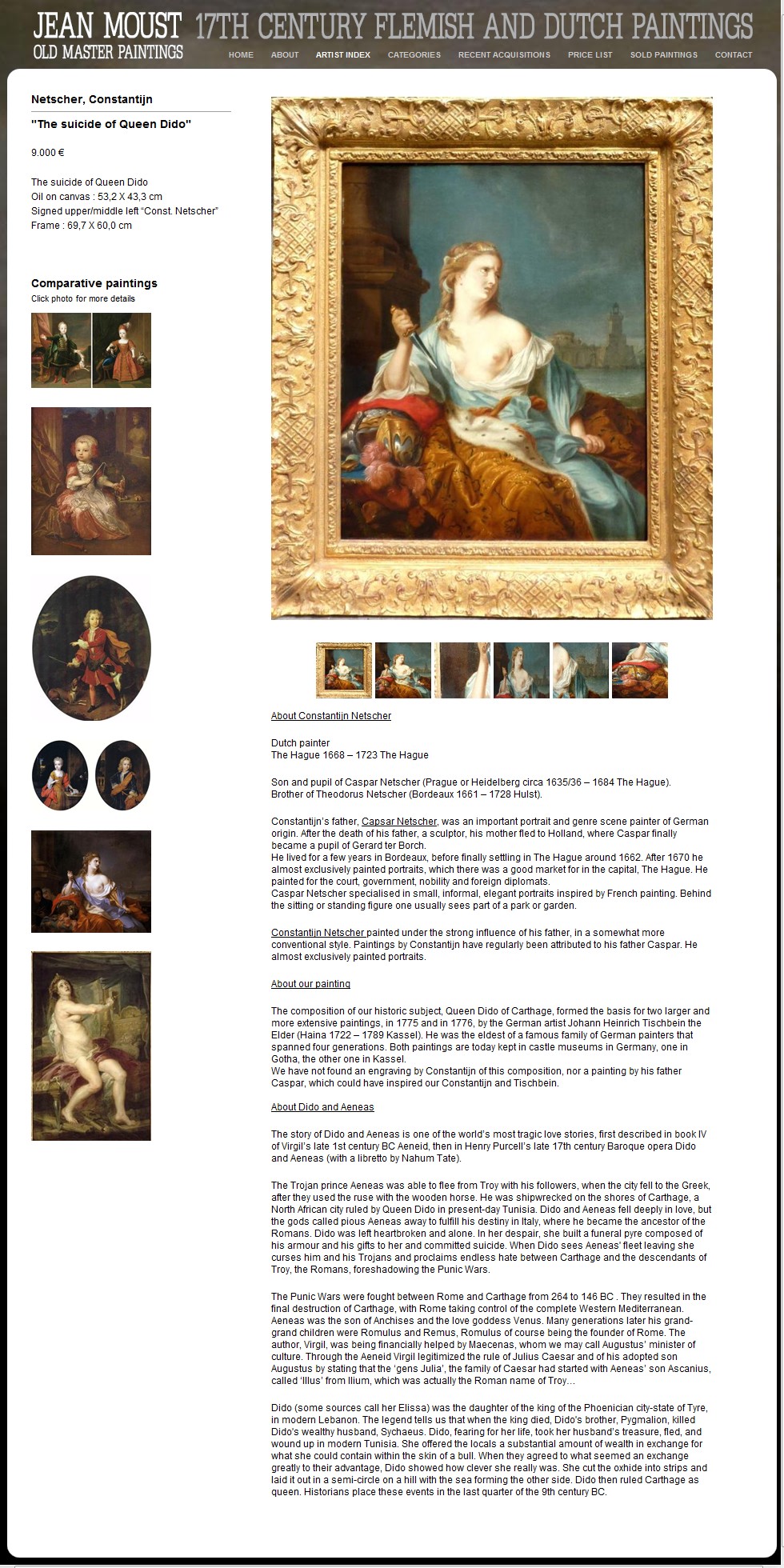
The suicide of Queen Dido,
by Constantijn
Netscher
|
|
|
La tragedia di Didone, by Rosa Infante |
|
|
Tunisian Queen Dido prevails, by Middle East Online |
Materiali filologici:
|
|
L'Ade, by Saint-Seiya.it |
|
|
Dante and the
medieval invention of the self, by Gary Gutchess
|
|
|
La gerarchia
dell'Alloro, by Carneade
|
|
|
L'impossibile perdono del nemico nella letteratura classica. La pietà, la riconciliazione e l'ira in Achille, Odisseo ed Enea, by Maria Raffaella Cornacchia |
|
|
L'incubo, by Valeria Paliero |
|
|
La leggenda troiana in Etruria, by Alberto Palmucci |
|
|
Messalina, by Francesco Pona |
|
|
Il mito di Didone nel Tempo, by SSIS Lazio |
|
|
Moriamur, by
QueenDido.org
|
|
|
Una nota a proposito del significato della Primavera di Botticelli, by Franco Baldini |
|
|
Perché Elissa, by Salvatore Conte |
|
|
The
Persona in Apuleius' Florida, by Vincent Hunink |
|
|
Storia della Sardegna e della Corsica, by Ettore Pais |
|
|
Il Traduttore fedele, by Rocco De Vitis |
|
|
A Various Villainy: Silius Italicus' Hannibal and Virgil's Aeneid, by
Ben Tipping
|
|
|
Virgilio nel Medioevo, by Domenico Comparetti |
Bibliografie Virgiliane:
|
|

Tanit links:
|
|
From Infant sacrifice to the ABC’s: Ancient Phoenicians and Modern Identities, by Brien Garnand |
|
|
I Figli di Tanith, by Michele Trapani |
|
|
The Riddle of the Protective
Crescent in Punic Votive Art, by Léo Dubal
|
Elissa di Tiro,
nobiltà fenicia
Tiro ~840 - Cartagine ~750 a.C.

Enciclopedia Fenicia
di Salim George Khalaf
(NC, USA)
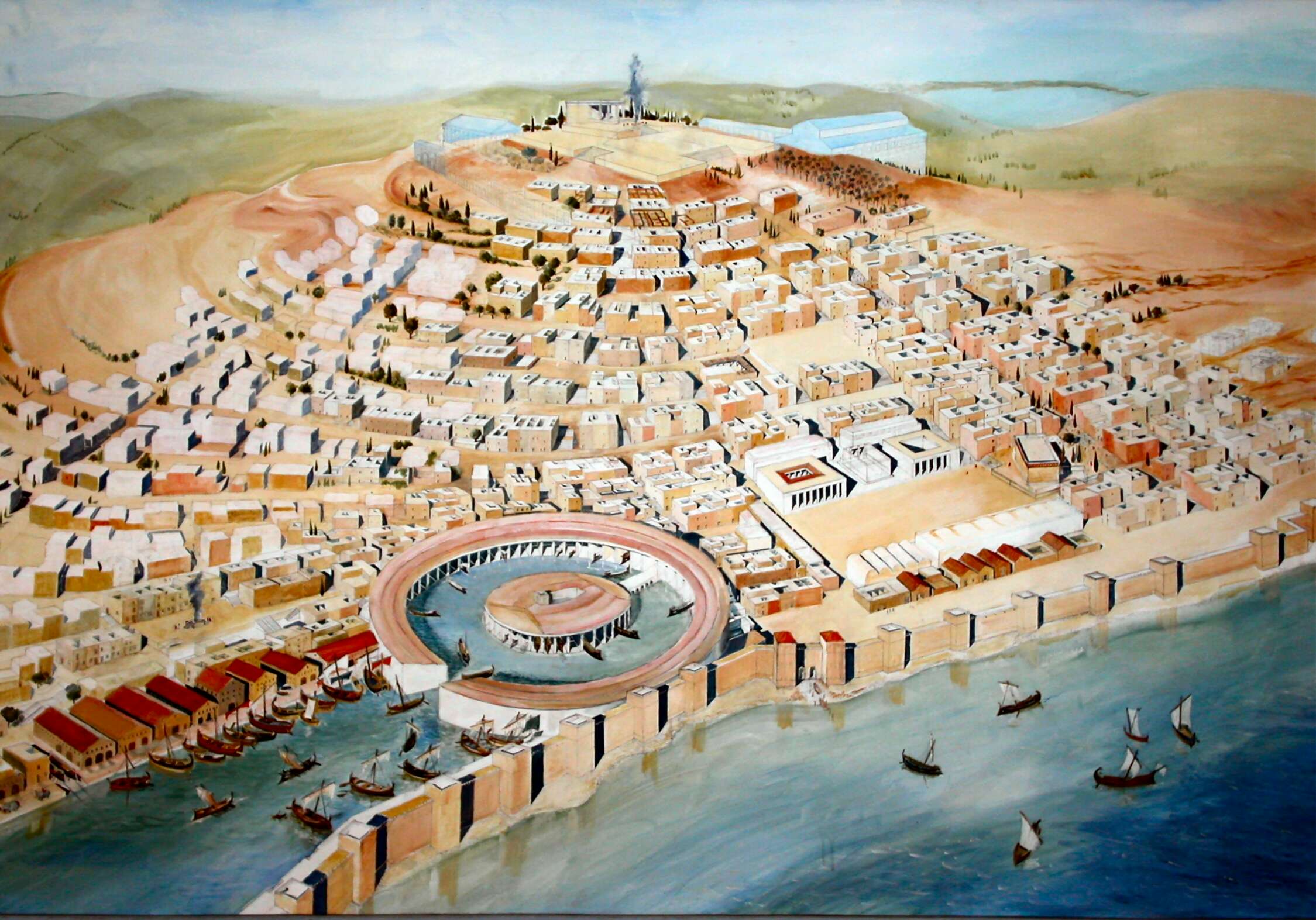
 There
was a grove in the centre of the city, delightful
There
was a grove in the centre of the city, delightful
with shade, where the wave and storm-tossed Phoenicians
first uncovered the head of
a fierce horse, that regal Juno
showed them: so the race would be noted in war,
and rich in substance throughout the ages.
Here Sidonian
Dido was establishing a great temple
to Juno, rich with gifts and divine presence,
with bronze entrances rising from stairways, and beams
jointed with bronze, and hinges creaking on bronze doors.
V. (I, 441-449, Kline)
Carthage links:
|
|
|
|
|
Bones, teeth, and estimating age of perinates: Carthaginian infant sacrifice
revisited
|
|
|
|
|
|
|
|
|
|
|
|
|
|
|
|
|
|
Skeletal Remains from Punic Carthage Do Not Support
Systematic Sacrifice of Infants
(Missione Archeologica Italiana in Cartagine) |
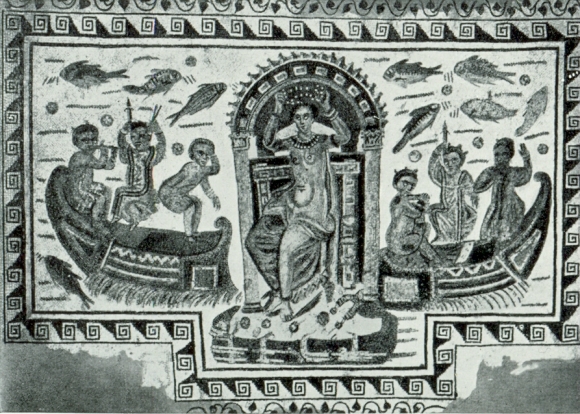
Dido as Virgil's Ariadne:
|
|
Ariadne, by Carlos Parada |
|
|
Arianna: una donna preda delle passioni, alla ricerca della propria identità, by Fabia Zanasi Ella mesta guardando la nave allontanarsi,
ferita
meditava in cuore molteplici affanni. con una schiera di Satiri e coi nisigeni Sileni, cercando te, Arianna, e spinto dal tuo amore. CATULLO |